7 Easy Ways How to Grow Frost Carrots
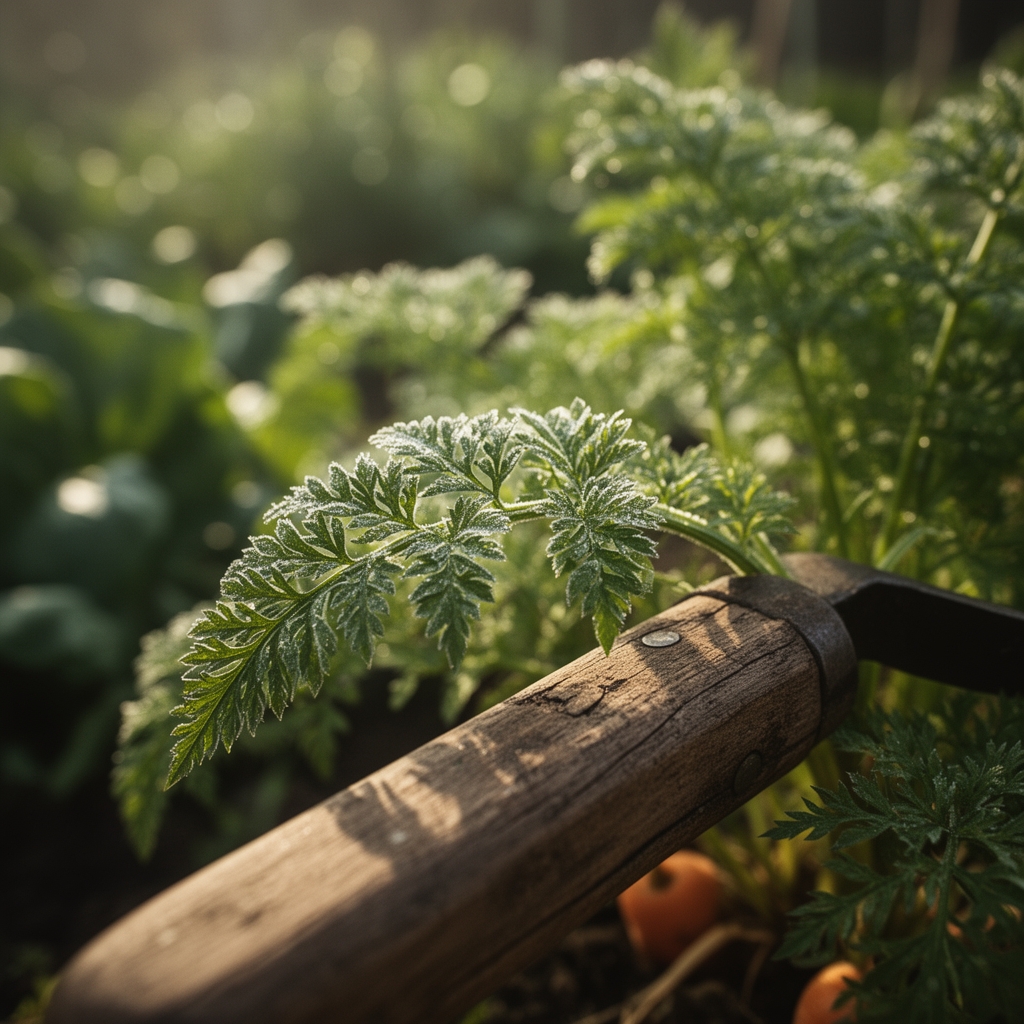
Frost carrots emerge from frozen soil with concentrated sugars that surpass summer harvests by twenty to thirty percent. Cold-triggered starch conversion turns bland roots into sweet, crisp cylinders. Learning how to grow frost carrots requires inverting conventional harvest schedules and embracing physiological changes that occur below 32°F. Snow cover becomes insulation, not catastrophe. The first freeze signals peak flavor rather than crop failure.
Materials and Soil Chemistry
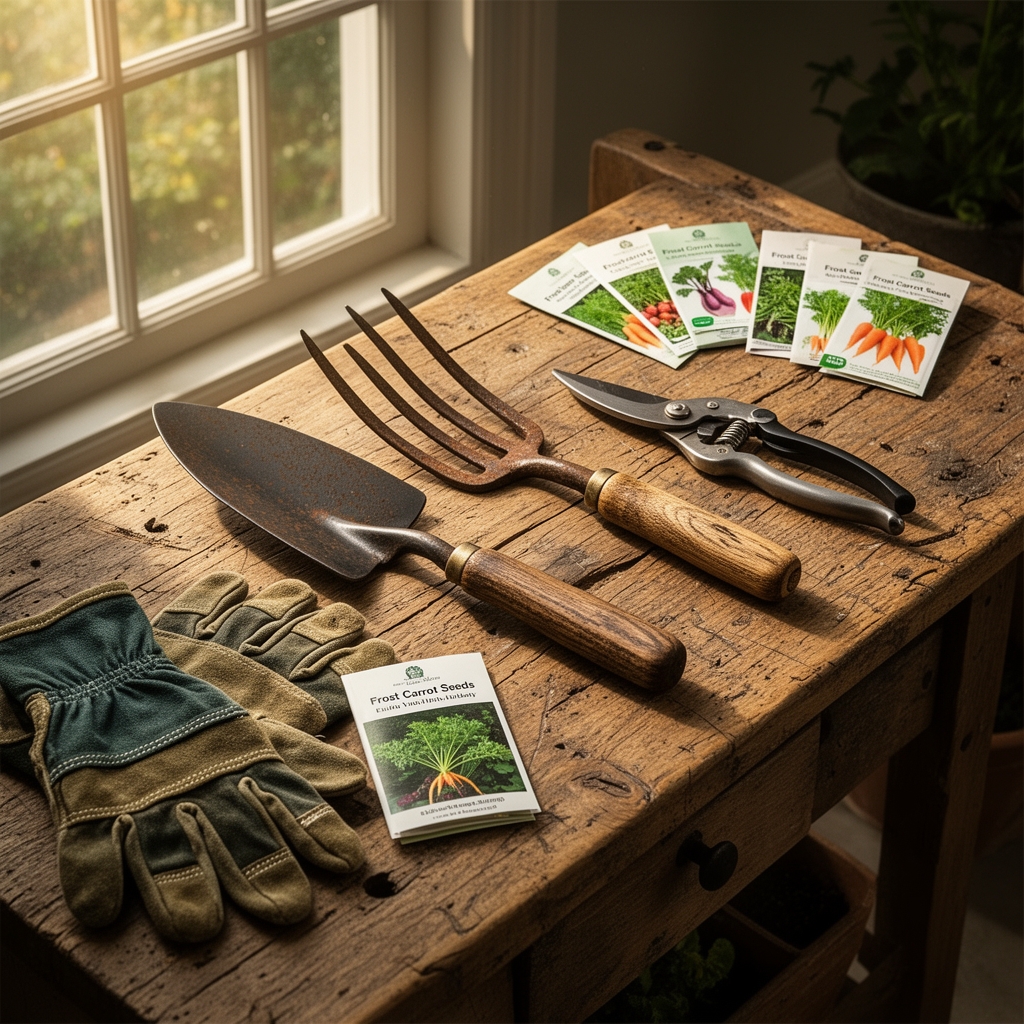
Frost carrots demand soil pH between 6.0 and 6.8 for optimal calcium uptake and taproot elongation. Test your soil three weeks before sowing. Amend with sulfur if readings exceed 7.0. For nitrogen-phosphorus-potassium ratios, apply 4-4-4 organic meal at two pounds per 100 square feet during bed preparation. Aged compost improves cation exchange capacity and prevents forking caused by fresh manure.
Loose, stone-free soil extends roots to twelve inches without resistance. Remove rocks larger than one inch diameter. Incorporate perlite or coarse sand at fifteen percent by volume if your clay content exceeds thirty percent. Mycorrhizal fungi inoculants applied at seeding increase phosphorus bioavailability by forty percent in cold soils where microbial activity slows.
Boron deficiency causes hollow heart and cracked shoulders. Apply one tablespoon of borax dissolved in one gallon of water per 100 square feet if previous crops showed symptoms. Avoid overapplication. Toxicity appears above two tablespoons per 100 square feet.
Timing and Hardiness Zones
Zones 4 through 7 offer ideal frost carrot conditions. Sow seeds eight to ten weeks before the first expected frost date. In Zone 5, mid-July to early August plantings mature by late October. Zone 6 gardeners sow through late August for November harvest windows.
Carrots require fourteen days at 40°F to break seed dormancy efficiently. Soil temperatures between 50°F and 85°F support germination, but 60°F to 70°F proves optimal. Use a soil thermometer at two-inch depth. Wait until consistent readings reach 50°F before direct seeding.
Late-season sowings avoid carrot rust fly populations that peak in June. Frost exposure beginning at fifty days post-emergence initiates sugar accumulation. Plan for at least three hard frosts (temperatures below 28°F for four hours) before final harvest. Each freeze cycle increases glucose and fructose ratios.
Phases of Development
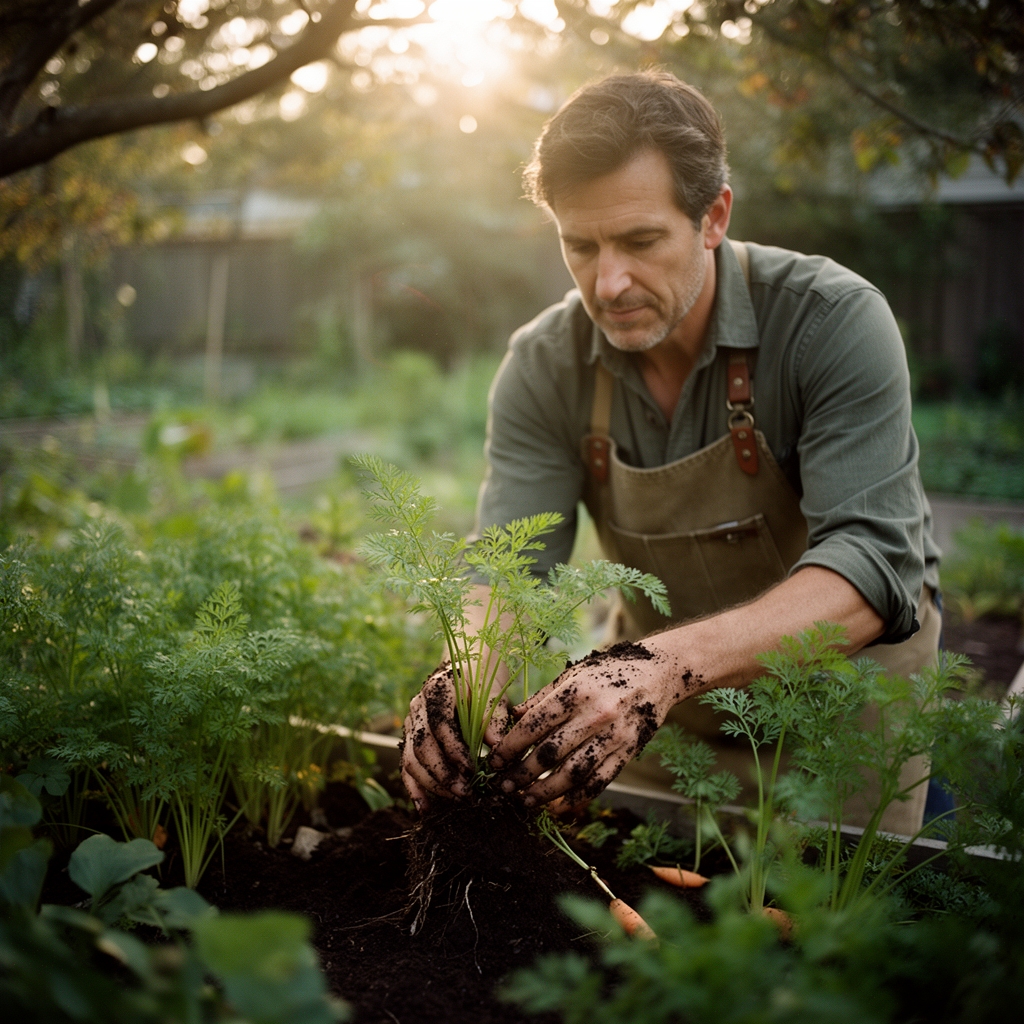
Sowing
Broadcast seeds at twenty per foot in rows spaced six inches apart. Cover with one-quarter inch of vermiculite instead of soil. Vermiculite prevents crusting and maintains consistent moisture contact. Water with a fine mist to avoid seed displacement. Germination occurs in ten to twenty-one days depending on soil temperature.
Pro-Tip: Mix radish seeds at a 1:10 ratio with carrot seeds. Fast-germinating radishes break soil crusts and mark rows for cultivation before carrots emerge.
Thinning and Establishing
Thin seedlings to one plant every two inches when true leaves appear at fourteen days. Crowded roots fork and twist. Remove weakest seedlings by cutting at soil level rather than pulling. Pulling disturbs neighboring root systems and releases volatile compounds that attract carrot rust flies.
Apply half-inch of straw mulch after thinning. Mulch moderates soil temperature swings and suppresses winter annual weeds. Keep mulch two inches away from seedling crowns to prevent damping-off pathogens.
Pro-Tip: Side-dress with 5-10-10 fertilizer at four weeks post-emergence, applying one tablespoon per foot of row. High phosphorus supports root elongation. Avoid excess nitrogen after this point; it promotes foliar growth and hollow cores.
Frost Conditioning
Once nighttime temperatures consistently drop below 40°F, reduce watering to every ten days. Mild water stress concentrates sugars and prevents splitting during freeze-thaw cycles. Monitor soil moisture at four inches depth. Maintain slight dampness but never saturation.
Pro-Tip: After the first hard freeze, apply six inches of straw mulch over rows. This insulation prevents soil from freezing solid, allowing harvest throughout winter. Mark row ends with tall stakes for location under snow.
Troubleshooting Common Disorders
Symptom: Forked or twisted roots with multiple growing points.
Solution: Result of rocky soil, fresh manure, or root-knot nematodes. Solarize soil for six weeks pre-planting in nematode-infested beds. Remove all stones during preparation.
Symptom: Green shoulders protruding above soil line.
Solution: Light exposure triggers chlorophyll and bitter terpenoids. Hill soil over crowns when roots reach pencil thickness, typically thirty days post-emergence.
Symptom: Cracked longitudinal splits in mature roots.
Solution: Inconsistent watering causes uneven cell expansion. Water deeply once weekly rather than frequent shallow irrigation. Provide one inch per week through bulking phase.
Symptom: Black, sunken lesions on roots and wilting foliage.
Solution: Alternaria leaf blight thrives in humid conditions. Space plants adequately for airflow. Apply copper fungicide at label rates when symptoms first appear.
Symptom: Stunted roots with excessive hairy lateral growth.
Solution: Aster yellows disease vectored by leafhoppers. Remove infected plants immediately. Control leafhoppers with row covers during establishment.
Maintenance Protocols
Provide one inch of water weekly until four weeks before first frost. Reduce to half-inch weekly during cold hardening. Use drip irrigation or soaker hoses. Overhead watering encourages foliar diseases and washes away mycorrhizal networks.
Scout for carrot rust fly larvae weekly by examining root crowns. Larvae create rusty-brown tunnels. Deploy row covers immediately after seeding and keep sealed until harvest in affected regions.
Apply liquid kelp fertilizer at one tablespoon per gallon every three weeks. Kelp provides trace minerals and cytokinins that enhance stress tolerance without excessive vegetative growth.
Remove competing weeds by shallow cultivation to one inch depth. Deeper cultivation severs feeder roots. Hand-pull weeds within two inches of carrot crowns.
Frequently Asked Questions
Can frost carrots survive temperatures below 20°F?
Roots tolerate 15°F under six inches of mulch. Exposed crowns sustain cellular damage below 20°F. Mulch depth determines survival thresholds.
Why do my frost carrots taste bitter?
Insufficient cold exposure or green shoulders cause bitterness. Ensure three freeze cycles and proper hilling. Terpenoid concentration decreases after 28°F exposure.
When should I harvest for maximum sweetness?
Wait seven to ten days after the third hard frost. Starch-to-sugar conversion requires repeated freeze-thaw cycles. Test harvest one root for flavor assessment.
Do frost carrots store differently than summer carrots?
Higher sugar content reduces storage life. Consume within eight weeks at 32°F and 95% humidity. Remove tops to prevent moisture loss through transpiration.
Which varieties perform best as frost carrots?
Nantes types like 'Bolero' and 'Nelson' offer cold tolerance and compact tops. 'Napoli' matures quickly for short-season zones. Avoid Imperator types; they require longer growing seasons.