7 Easy Ways How to Use Hardiness Maps
The soil freezes in waves, not walls. A gardener in coastal Maine and another in inland Vermont may share latitude but face entirely different growing conditions. Learning how to use hardiness maps transforms guesswork into precision, enabling you to select perennials that survive winter, schedule sowings to the week, and understand why your neighbor's hydrangeas thrive while yours blacken each February.
Hardiness maps divide regions into zones based on average annual minimum temperatures. The USDA system, updated in 2012 and refined with 2023 data, uses ten-degree Fahrenheit bands. Zone 5a experiences lows of -20 to -15°F, while Zone 7b sees 5 to 10°F. Microclimates within a single property can span two zones. South-facing walls radiate heat. Low-lying swales trap cold air. Knowing how to use hardiness maps means layering this zone data with your site's topography, wind exposure, and soil drainage to create a planting blueprint that accounts for every thermal advantage.
Materials
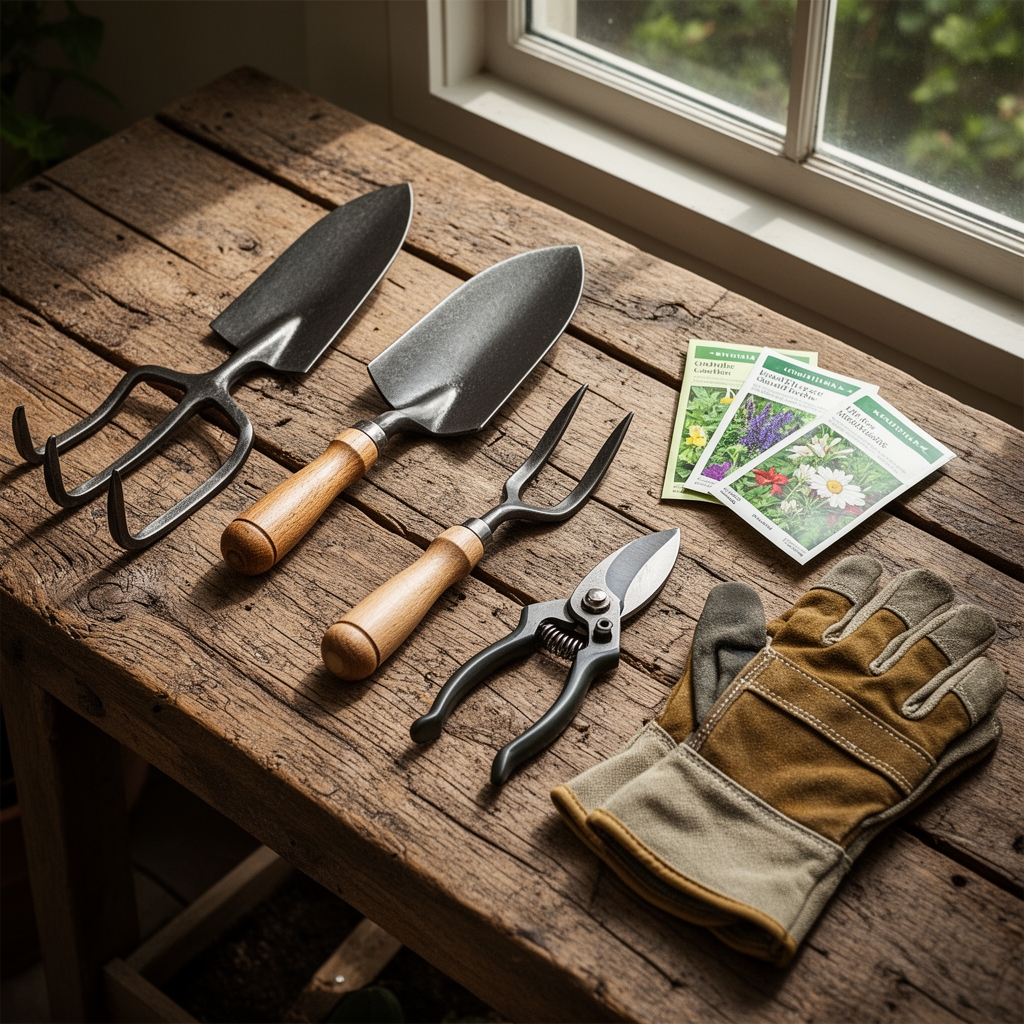
Begin with a printed hardiness zone map from USDA or a regional extension service. Digital versions offer zoom functions, but paper allows field annotation. Obtain a soil test kit that measures pH, phosphorus (P), potassium (K), and nitrogen (N). Most perennials tolerate pH 6.0 to 7.0. Acid-loving genera like Rhododendron demand 4.5 to 5.5.
For soil amendment, select organic matter with balanced ratios. A 4-4-4 organic meal supplies equal parts N-P-K and improves cation exchange capacity, the soil's ability to hold nutrients. Compost aged six months contributes slow-release nitrogen and introduces beneficial bacteria. Mycorrhizal fungi inoculant, applied at 0.1 ounces per cubic foot, colonizes roots and extends phosphorus uptake by 700 percent in sandy soils.
Mulch materials depend on zone. Zones 3 through 5 benefit from 4 inches of shredded hardwood bark to insulate crowns. Zones 8 through 10 use 2 inches of pine straw to moderate summer heat without trapping excess moisture.
Timing
Hardiness zones dictate frost-free windows. Zone 5 typically sees last spring frost May 1 to 15, first fall frost September 15 to 30. Zone 7 extends from April 1 to 15 in spring, October 15 to 31 in fall. Cross-reference zone data with local cooperative extension frost tables. Elevation shifts of 1,000 feet can delay spring by two weeks.
Perennials establish best when planted six weeks before the first fall frost. Roots grow while air temperatures drop but soil remains above 50°F. This period allows auxin distribution, the hormone that stimulates lateral root branching, to proceed without competition from top growth.
Bare-root stock ships during dormancy, typically March through April in Zones 4 through 6. Container stock transplants spring through fall but suffers stress if moved during active bloom. Avoid transplanting when soil temperature exceeds 75°F; root hairs desiccate within minutes.
Phases
Sowing: Direct-sow cold-hardy annuals like Papaver (poppy) and Calendula (pot marigold) four weeks before the last frost in Zones 5 and above. Seeds require soil contact and light scarification. Press seeds into soil without covering. Germination occurs at 50 to 60°F soil temperature.
Pro-Tip: Inoculate legume seeds (Lathyrus, sweet pea) with Rhizobium bacteria. This symbiosis fixes atmospheric nitrogen, reducing fertilizer needs by 40 percent.
Transplanting: Harden off seedlings by reducing water 20 percent and exposing them to outdoor conditions for two hours daily over ten days. Transplant on overcast days to minimize transplant shock. Dig holes twice the root ball width. Position the crown level with surrounding soil. Planting too deep suffocates roots; too shallow exposes them to freeze-thaw cycles.
Pro-Tip: Prune container-bound roots at 45-degree angles. This angle stimulates adventitious root formation at cut sites, increasing root mass by 30 percent within eight weeks.
Establishing: Water transplants with 1 gallon per plant immediately after planting. This eliminates air pockets and initiates capillary action. Apply a starter fertilizer with a 1-2-1 ratio (N-P-K) at half strength. High phosphorus accelerates root elongation during the establishment phase.
Pro-Tip: Install root barriers 18 inches deep around aggressive spreaders like Mentha (mint) or Aegopodium (goutweed). Polyethylene barriers redirect energy into vertical growth rather than horizontal rhizomes.
Troubleshooting
Symptom: Crown rot. Crowns turn mushy and brown at soil line.
Solution: Improve drainage by incorporating coarse sand at 25 percent by volume. Raise planting beds 6 inches. Reduce irrigation frequency. Apply Trichoderma fungal biocontrol at 1 ounce per 10 square feet.
Symptom: Winter dieback in marginally hardy plants.
Solution: Apply 6 inches of straw mulch after soil freezes in late November. This prevents freeze-thaw cycling, which heaves roots from soil. Remove mulch in early March before new growth emerges.
Symptom: Leaf scorch on broadleaf evergreens.
Solution: Install burlap windbreaks on the northwest side of plants in Zones 5 and colder. Apply anti-desiccant spray in late November and again in February. Water evergreens deeply in late fall to ensure hydrated tissues.
Symptom: Delayed flowering in perennials moved from warmer zones.
Solution: Verify chilling hour requirements. Many perennials require 800 to 1,200 hours below 45°F to break dormancy. Insufficient chilling delays or prevents flowering.
Symptom: Aphid colonization on new growth.
Solution: Release Aphidius colemani parasitoid wasps at 1 per square foot. Adults parasitize 200 aphids each. Maintain populations with nectar-rich plants like Lobularia (alyssum).
Maintenance
Water established perennials 1 inch per week during active growth, measured with a rain gauge. Deep watering to 8 inches encourages roots to penetrate beyond the surface. Shallow daily watering creates weak, surface-bound root systems vulnerable to drought.
Fertilize once in early spring with a 5-10-5 granular blend at 2 pounds per 100 square feet. Excess nitrogen produces lush foliage but reduces cold hardiness by 15 percent. Cease fertilization eight weeks before the first expected frost to allow tissues to lignify.
Divide clump-forming perennials every three to four years. Dig entire clumps in early spring as shoots emerge. Cut crowns into sections with at least three buds each using a sharp spade. Replant divisions immediately at the original depth.
FAQ
What is the difference between hardiness zones and heat zones?
Hardiness zones measure winter cold tolerance. Heat zones track days above 86°F, the temperature at which many plants experience cellular damage. Both systems inform plant selection.
Can I grow plants rated one zone colder than mine?
Yes, with microclimate management. South walls, stone mulches, and wind protection raise effective zone ratings by one full zone.
How accurate are online hardiness zone maps?
USDA maps use 30-year temperature averages from weather stations. Accuracy within a property varies. Use maps as starting points and adjust for site-specific conditions.
Do hardiness zones account for humidity?
No. Hardiness zones measure temperature only. Coastal Zone 7 and arid Zone 7 differ significantly in humidity, affecting disease pressure and water needs.
Should I update my zone assumptions due to climate change?
Yes. The 2023 USDA update shifted many areas half a zone warmer. Recheck your zone every five years and monitor first and last frost dates annually.