7 Easy Ways How to Grow Biennial Vegetables
Growing biennial vegetables rewards the patient gardener with robust root systems, cold-hardy greens, and prolific seed production. These plants complete their life cycle over two growing seasons, building reserves in the first year before flowering and setting seed in the second. Mastering how to grow biennial vegetables transforms your garden into a self-renewing food system. Cool-season biennials like carrots, beets, parsley, and members of the Brassica genus demand different care than their annual counterparts. The first season focuses on vegetative growth and nutrient storage in roots, stems, or leaves. The second season channels that stored energy into flowering stalks and seed formation.
Materials
Match your amendments to the specific needs of root-focused versus leaf-focused biennials. Carrots, parsnips, and beets thrive in sandy loam with pH 6.0 to 6.8 and benefit from a balanced 4-4-4 organic meal applied at planting. Avoid fresh manure; it forks taproots and reduces marketability. Kale, cabbage, and other brassicas prefer slightly more alkaline conditions, pH 6.5 to 7.0, with higher nitrogen inputs during establishment. Use a 5-3-3 blood meal blend for leafy biennials, applied at 2 pounds per 100 square feet.
Incorporate mycorrhizal fungi inoculant at transplanting to enhance phosphorus uptake and drought tolerance. The hyphal networks extend root reach by a factor of 100. Test cation exchange capacity annually; aim for 10 to 15 meq/100g in production beds. Amend heavy clay with 2 inches of aged compost and 1 inch of coarse sand to improve drainage. Biennial roots rot quickly in waterlogged conditions.
Timing
Hardiness zones dictate when to start biennial vegetables for optimal vernalization. Zones 3 through 6 require early spring sowings, typically 4 to 6 weeks before the last expected frost. In Zones 7 through 9, fall plantings from late August through October allow roots to establish before winter dormancy. The plant must experience 4 to 8 weeks of temperatures between 32°F and 50°F to trigger flowering genes in the second year. Without this cold period, biennials remain vegetative indefinitely or bolt prematurely.
Monitor soil temperature rather than air temperature. Carrot seeds germinate at 45°F to 85°F but establish strongest at 60°F. Parsnips require consistent moisture and soil temperatures near 50°F for the 14 to 21 days until emergence. Transplant brassica seedlings when they reach the 4-true-leaf stage, roughly 3 to 4 weeks after germination indoors. Harden off transplants over 7 days by exposing them to outdoor conditions for progressively longer periods.
Phases
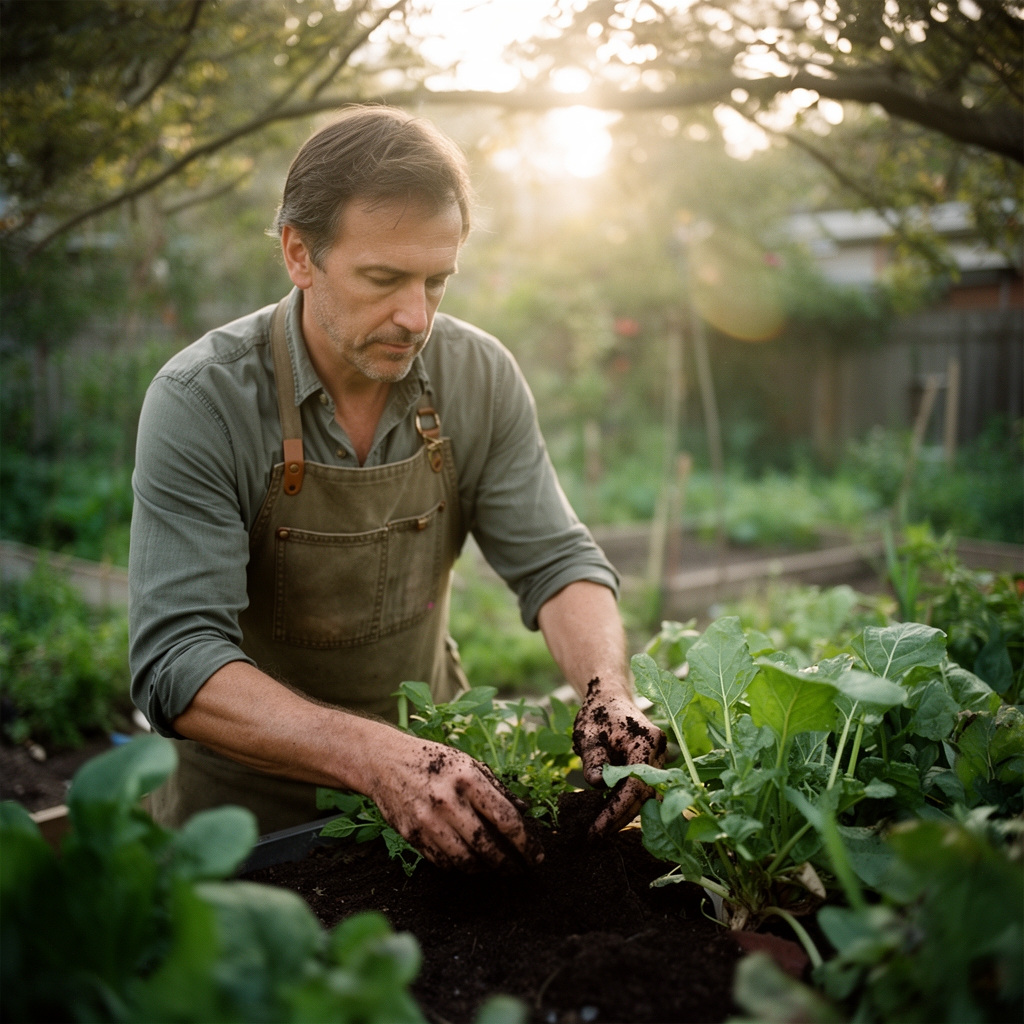
Sowing: Direct-seed root crops 1/4 to 1/2 inch deep in rows spaced 12 to 18 inches apart. Pelleted seed improves spacing precision and reduces thinning labor. Keep the top 1 inch of soil consistently moist for 10 to 14 days. Lettuce tape or fluid drilling in a cornstarch gel ensures even distribution. For small-seeded biennials like carrots, mix seed with dry sand at a 1:10 ratio to prevent clumping.
Pro-Tip: Apply Trichoderma harzianum fungal spores at seeding to colonize the rhizosphere and suppress damping-off pathogens.
Transplanting: Set brassica transplants at the same depth they grew in cell trays or slightly deeper to encourage adventitious rooting along buried stems. Space cabbage 18 inches apart, kale 12 inches, and Brussels sprouts 24 inches to accommodate mature canopy spread. Water each transplant with 1 cup of dilute fish emulsion (2 tablespoons per gallon) to reduce transplant shock and deliver immediately available nitrogen.
Pro-Tip: Trim the bottom third of rootbound transplant roots at a 45-degree angle to stimulate lateral root proliferation and improve auxin distribution.
Establishing: Thin direct-seeded crops when seedlings develop their first true leaves. Carrots should stand 2 to 3 inches apart, beets 3 to 4 inches. Removed thinnings make excellent microgreens. Mulch established rows with 2 inches of straw or shredded leaves to moderate soil temperature, retain moisture, and suppress weeds. Avoid mulching until soil warms to 60°F; premature mulch delays root development.
Pro-Tip: Side-dress established biennials with 1/2 cup of 5-10-10 granular fertilizer per 10 feet of row at 6 weeks post-emergence to support root bulking.
Troubleshooting
Symptom: Forked or hairy carrot roots.
Solution: Excess nitrogen or fresh manure causes secondary root proliferation. Use only aged compost and reduce nitrogen to 3% or lower.
Symptom: Cabbage splitting before harvest.
Solution: Rapid water uptake after drought stress splits heads. Maintain consistent soil moisture at 1 inch per week throughout the season.
Symptom: Premature bolting in first season.
Solution: Early exposure to cold or long days triggers flowering. Start seeds after soil warms to 50°F and provide shade cloth during heat waves above 85°F.
Symptom: Black rot on brassica leaves (yellow V-shaped lesions).
Solution: Xanthomonas campestris bacterial infection. Remove affected plants, rotate crops on a 3-year cycle, and disinfect tools with 10% bleach solution.
Symptom: Carrot rust fly larvae tunneling in roots.
Solution: Cover rows with insect netting immediately after seeding. Adult flies emerge when soil reaches 55°F in spring.
Maintenance
Water deeply once per week to deliver 1 inch of moisture, measured with a rain gauge. Biennial roots penetrate 12 to 24 inches; shallow watering encourages surface rooting and reduces drought tolerance. Drip irrigation at 0.5 gallons per hour per emitter minimizes foliar diseases. Weed weekly for the first 6 weeks; biennial seedlings grow slowly and lose competition for light and nutrients. Once established, a dense canopy shades out most annual weeds.
Scout for aphids and flea beetles twice weekly. Spinosad spray at 4 tablespoons per gallon controls both pests organically. Apply in early morning when pollinators are inactive. Harvest roots before the first hard freeze at 28°F or lower. Mulch in-ground storage crops with 12 inches of straw in Zone 6 and colder to prevent freeze damage.
FAQ
How long do biennial vegetables take to produce seed?
Most require 18 to 24 months from germination to viable seed. The first season builds plant mass; the second produces flowers and mature seed pods.
Can I harvest biennials in year one and still get seeds in year two?
Yes, if you leave the crown and upper root intact. Cut kale leaves no lower than 4 inches from the base. Parsnips and carrots must remain fully in the ground.
Why did my biennial vegetable flower in the first year?
Premature bolting results from stress, typically cold exposure below 45°F for more than 2 weeks in spring or inconsistent watering.
Do biennial vegetables need fertilizer in the second year?
Yes. Apply 5-10-10 at 3 pounds per 100 square feet in early spring to support flowering stalk development and seed fill.
Which biennial vegetables are easiest for beginners?
Kale, chard, and parsley tolerate variable conditions and produce abundant leaves in year one. Onions and leeks also adapt well to diverse climates.