9 Best Sulfur for Acidifying Soil
Crush a handful of damp, friable loam and you will feel the grit of mineral particles against the hydraulic pressure of a healthy plant cell. When a blueberry bush or an azalea reaches peak turgor, the leaves feel stiff and waxy; this is the direct result of a root system operating at an optimal pH. Most calcifuge plants require a soil pH between 4.5 and 5.5 to facilitate the uptake of iron and manganese. In alkaline environments, these micronutrients become chemically locked. To break this bond, you must deploy the best sulfur for acidifying soil to trigger a long term biochemical shift. This is not an overnight fix. It is a slow, microbial oxidation process where Thiobacillus bacteria convert elemental sulfur into sulfuric acid. Without this acidification, your plants will suffer from interveinal chlorosis and stunted growth. Achieving the correct acidity requires precise measurements of your current soil profile and a deep understanding of the cation exchange capacity within your specific garden plot.
Materials:

The selection of sulfur depends entirely on your soil texture and the current pH reading. For a friable loam with a starting pH of 7.5, you will need approximately 1.5 pounds of elemental sulfur per 100 square feet to drop the pH by one full point.
- Elemental Sulfur (90 percent): The gold standard for long term acidification. It has an NPK ratio of 0-0-0 but provides the raw material for microbial oxidation.
- Aluminum Sulfate: Provides an immediate pH drop through a chemical reaction rather than a biological one. Use with caution as aluminum toxicity can occur if over-applied.
- Iron Sulfate: Lowers pH while simultaneously addressing iron deficiency. It requires eight times the mass of elemental sulfur to achieve the same pH shift.
- Dispersible Granules: These are engineered to break down rapidly upon contact with water, increasing the surface area for bacterial colonization.
- Sulfur Dust: Best for localized application or mixing into potting media; however, it poses a respiratory irritant risk.
- Ammonium Sulfate: An acidic nitrogen source with an NPK of 21-0-0. Best for plants in the vegetative stage.
- Prilled Sulfur: Spherical beads that are easy to spread with a broadcast spreader and resist wind drift.
- Liquid Sulfur Suspensions: Used for rapid foliar or soil drench applications in commercial viticulture.
- Organic Soil Acidifiers: Often contain a blend of elemental sulfur and gypsum to improve soil structure while lowering pH.
Timing:
Timing is dictated by the Biological Clock of the soil microbiome. In Hardiness Zones 4 through 6, sulfur should be applied in the autumn to allow the freeze-thaw cycle to incorporate the granules. In warmer Hardiness Zones 8 through 10, applications can occur year round, provided the soil temperature remains above 55 degrees Fahrenheit. This is the thermal threshold where Thiobacillus bacteria become active.
Do not apply sulfur during the reproductive stage (flowering or fruiting) as the sudden shift in soil chemistry can cause bud abscission. Aim for the window between late senescence and the first hard frost. If applying in the spring, ensure the application is completed at least 60 days prior to the transition from vegetative to reproductive stages to avoid shocking the rhizosphere.
Phases:

Sowing and Preparation
Before a single seed hits the ground, you must establish the chemical foundation. Incorporate elemental sulfur into the top 6 inches of soil. For new beds, a heavy application of organic matter like peat moss or pine bark will lower the initial bulk density and provide a carbon source for beneficial microbes.
Pro-Tip: Mycorrhizal symbiosis is inhibited at high pH levels. By lowering the pH to 5.0, you facilitate the colonization of Ericoid mycorrhizae, which are essential for the nutrient uptake of acid loving species.
Transplanting
When moving a sapling or shrub, the planting hole should be twice the width of the root ball. Mix the sulfur into the backfill soil rather than placing it in a concentrated layer at the bottom. This prevents localized "hot spots" of acidity that could cauterize tender new root hairs.
Pro-Tip: Use a soil moisture meter to ensure the area stays consistently damp. Microbial oxidation of sulfur requires oxygen and moisture; if the soil dries out completely, the acidification process halts.
Establishing
During the first growing season, monitor the plant for signs of auxin suppression. High pH can interfere with the hormonal balance of the plant, leading to "witch's broom" growth patterns or shortened internodes. Apply a light top-dressing of sulfur annually to maintain the pH gradient as irrigation water often leaches minerals back into the root zone.
Pro-Tip: Phototropism is most effective when the plant is not under mineral stress. A balanced pH ensures that the plant can move water efficiently to maintain the turgor pressure required for leaves to track the sun.
The Clinic:
Symptom: Interveinal Chlorosis
Description: Leaves turn yellow while the veins remain dark green. This is a classic sign of iron or manganese deficiency caused by high pH.
Fix-It: Apply iron sulfate at a rate of 5 pounds per 1000 square feet for a quick green-up, followed by elemental sulfur for a permanent fix.
Symptom: Marginal Leaf Burn
Description: The edges of the leaves appear scorched or brown. This often indicates sodium accumulation or a sudden spike in soil salinity.
Fix-It: Flush the soil with 2 inches of water to leach salts and apply gypsum (calcium sulfate) to displace sodium ions on the cation exchange sites.
Symptom: Stunted Root Architecture
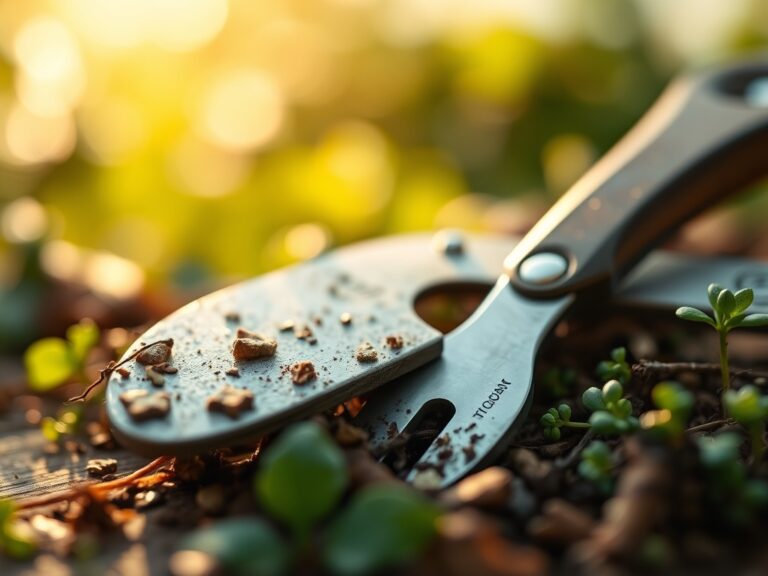
Description: Upon inspection with a hori-hori knife, the roots appear blunt, brown, and lack fine white root hairs.
Fix-It: Check for aluminum toxicity. If pH is too low (below 4.0), apply a small amount of dolomitic lime to bring the pH back into the safe 4.5 to 5.5 range.
Maintenance:
Precision maintenance prevents the "yo-yo" effect of fluctuating pH levels. Test your soil every six months using a professional lab service to track the Cation Exchange Capacity (CEC). High CEC soils (clay) require more sulfur to change the pH than low CEC soils (sand).
Apply 1.5 inches of water per week at the drip line to keep the sulfur active. Use bypass pruners to remove any dead or senescent wood, which reduces the fungal load on the plant. If the soil surface becomes compacted, use a garden fork to aerate the top 3 inches, ensuring oxygen reaches the Thiobacillus bacteria. Always clean your tools with a 10 percent bleach solution to prevent the transfer of pathogens between acidic and alkaline zones.
The Yield:
For fruit bearing acidophiles like blueberries, the yield is determined by the sugar to acid ratio. A lower pH increases the anthocyanin content, resulting in darker, more nutrient dense fruit. Harvest when the fruit detaches easily with a slight tug; this indicates the abscission layer has fully formed.
Post-harvest, cool the produce immediately to 33 degrees Fahrenheit to maintain "day-one" freshness. For ornamental flowers like hydrangeas, the soil pH dictates the color. A pH of 5.0 to 5.5 will produce deep blue sepals by making aluminum available to the plant. If the pH rises toward 6.5, the flowers will shift to pink.
FAQ:
How long does it take for sulfur to lower soil pH?
Elemental sulfur requires 3 to 6 months to show significant results. The process depends on soil temperature, moisture, and the presence of Thiobacillus bacteria. In cold or dry soils, the conversion to sulfuric acid can take up to one year.
Can I use flowers of sulfur for my garden?
Yes, flowers of sulfur is a fine powder form of elemental sulfur. It reacts faster than granules due to increased surface area but is difficult to apply evenly in windy conditions and can be easily washed away by heavy rain.
Will sulfur kill my existing plants?
If applied at the recommended rates, sulfur is safe. However, excessive application can cause a rapid pH drop that leads to root burn. Always measure your soil pH before applying and never exceed 2 pounds per 100 square feet per application.
Does sulfur provide any nutrients to plants?
Sulfur is an essential macronutrient used in the synthesis of amino acids like cysteine and methionine. It is also critical for chlorophyll production. While its primary use here is acidification, it also prevents common sulfur deficiencies in the rhizosphere.