10 Pro Tips How to Grow Medicinal Mushroom Kits
The scent of damp, decomposing wood and the cool humidity of a forest floor signal the onset of fungal colonization. When you learn how to grow medicinal mushroom kits, you are managing a living biological reactor rather than a traditional garden bed. Success depends on maintaining the turgor pressure of the mycelial hyphae as they navigate the substrate. You must control gas exchange and humidity to prevent the premature senescence of the organism.
Materials:
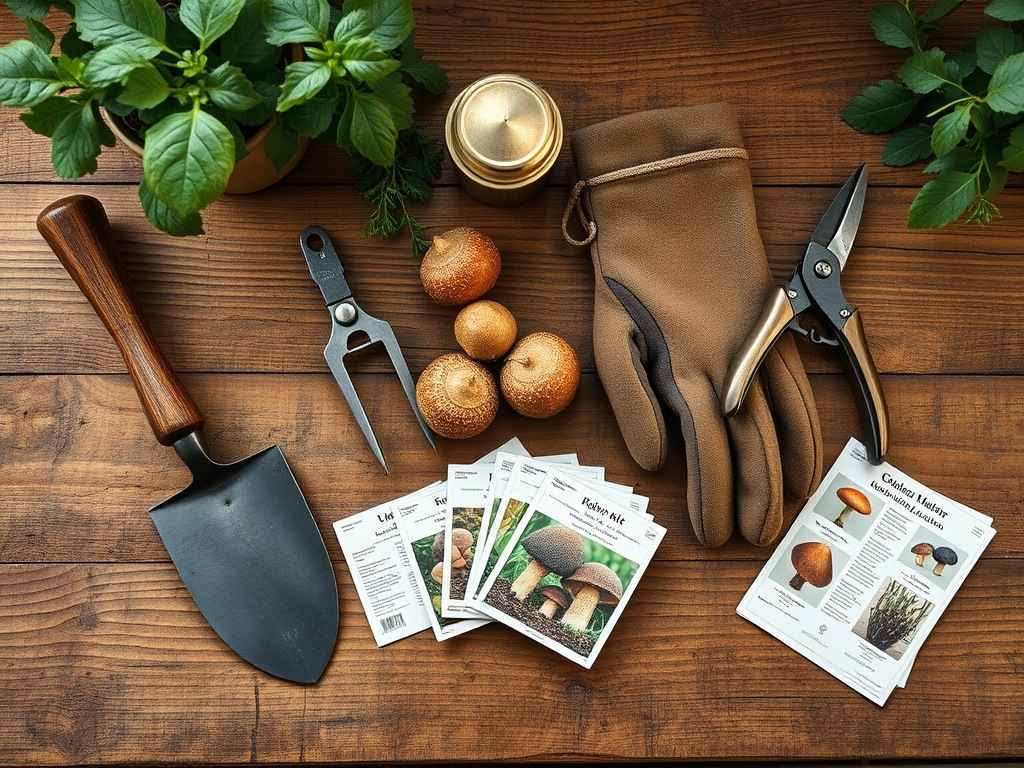
Unlike vascular plants, mushrooms do not utilize a traditional soil Cation Exchange Capacity (CEC) or standard NPK ratios of 10-10-10. Instead, the substrate functions as both the anchor and the primary carbon source. For species like Reishi (Ganoderma lucidum) or Lion's Mane (Hericium erinaceus), the substrate must be a friable mix of hardwood sawdust and wheat bran. The ideal pH for the substrate ranges between 5.5 and 6.5; acidity outside this window inhibits the enzymatic breakdown of lignin.
The nitrogen content should remain low, typically around a 1:50 nitrogen-to-carbon ratio. Excess nitrogen can lead to thermogenesis, where the internal temperature of the kit rises above 85 degrees Fahrenheit, effectively killing the mycelium. The texture must be porous enough to allow for oxygen diffusion but dense enough to retain a 60 percent moisture content.
Timing:
Mushroom kits are typically grown indoors, making them independent of traditional Hardiness Zones; however, ambient room temperature must mimic the cooler windows of Zone 6 or 7 during the fruiting phase. The biological clock of a mushroom kit is divided into the vegetative (colonization) phase and the reproductive (fruiting) phase.
The transition from vegetative growth to reproduction is triggered by "cold shocking" or a change in the photoperiod. Most medicinal species require a temperature drop to 55-65 degrees Fahrenheit for 48 hours to initiate primordia formation. Once the "pinheads" appear, the organism shifts its energy from horizontal mycelial expansion to the vertical development of the sporocarp.
Phases:
Sowing and Activation
To begin, you must breach the sterile seal of the substrate bag. Use a sterilized scalpel to create an "X" incision approximately 2 inches wide. This localized exposure to oxygen signals the mycelium that it has reached the surface of its "log."
Pro-Tip: Maintain high CO2 levels (above 800 ppm) during the first three days after cutting. This mimics the subterranean environment and prevents the surface mycelium from drying out before pins form. This is due to thigmotropism, where the mycelium reacts to the physical touch of the air and the plastic edge.
Transplanting to Fruiting Chamber
If the kit is removed from its original bag, it must be placed in a humidity tent or a "monotub." The base should consist of 2 inches of perlite saturated with distilled water. This ensures a constant relative humidity (RH) of 85 to 95 percent.
Pro-Tip: Ensure the kit receives indirect light at 6500K color temperature. While mushrooms do not photosynthesize, they are phototropic. Light acts as a biochemical switch that directs the growth of the pileus (cap) toward the oxygen source. Without this, the mushroom may develop "leggy" stipes with no medicinal value.
Establishing the Microclimate
Air exchange is the most critical factor during the establishment phase. You must facilitate 4 to 6 fresh air exchanges (FAE) per day. This prevents the accumulation of metabolic CO2, which can cause the mushroom to grow in distorted, coral-like patterns.
Pro-Tip: Use a soil moisture meter modified to measure substrate saturation. Keep the internal moisture at 60 percent. High moisture levels promote the hydraulic pressure needed for cell elongation, allowing the mushroom to double in size every 24 to 48 hours.
The Clinic:
Physiological disorders in mushroom kits often stem from environmental stressors rather than nutrient deficiencies.
Symptom: Yellow or amber droplets on the mycelium surface.
Solution: This is "mycelial metabolites" or "sweat." It indicates the kit is fighting a bacterial competitor or is stressed by high temperatures. Lower the ambient temp to 68 degrees Fahrenheit and increase airflow.
Symptom: Long, thin stems with tiny caps (in Reishi or Lion's Mane).
Solution: This is a classic hypercapnia response (excess CO2). The fungus is "reaching" for oxygen. Increase FAE immediately using a small fan or manual fanning.
Symptom: Dry, leathery patches on the fruiting body.
Solution: Relative humidity has dropped below 70 percent. Evaporative cooling is stripping moisture from the tissue. Mist the chamber walls, not the mushroom itself, to restore turgor.
Fix-It for Nutrient Stall: If growth stops despite perfect temp/humidity, the substrate may be spent. You can "recharge" the kit by soaking the entire block in cold, dechlorinated water for 12 hours to reset the biological clock for a second flush.
Maintenance:
Precision is mandatory for sustained yields. Use a soil moisture meter to ensure the core of the block never drops below 50 percent hydration. Instead of a standard watering can, use a mister that produces 50-micron droplets.
Apply moisture to the internal walls of the fruiting chamber twice daily. If you must prune away a contaminated section or a dead "pin," use a hori-hori knife or bypass pruners that have been wiped with 70 percent isopropyl alcohol. Never pull the mushroom from the block; this damages the delicate hyphal network. Instead, twist and pull or cut at the base to preserve the "rhizosphere" of the substrate for future flushes.
The Yield:
Harvesting medicinal mushrooms requires timing the "spore drop." For Reishi, harvest when the white growing edge disappears and the cap becomes a uniform mahogany color. For Lion's Mane, harvest when the "teeth" or icicle-like structures are 1/4 inch long.
Use a sharp blade to cut the mushroom flush with the substrate. To maintain "day-one" freshness, store the harvest in a paper bag (never plastic) in a refrigerator at 38 degrees Fahrenheit. This slows the metabolic rate and prevents the mushroom from becoming slimy. Most medicinal mushrooms can be dehydrated at 115 degrees Fahrenheit for long-term storage without degrading the beta-glucans.
FAQ:
How much light do medicinal mushroom kits need?
They require 12 hours of indirect, low-intensity light. Avoid direct sunlight, which can desiccate the mycelium and raise temperatures above the lethal 85-degree threshold. A simple LED in the 6500K range is sufficient for triggering the fruiting response.
Why is my mushroom kit growing white fuzz?
If the fuzz is bright white and smells earthy, it is healthy aerial mycelium seeking moisture. If it turns green, grey, or black, it is a mold contamination. Increase fresh air exchange and ensure your tools are sterilized.
Can I grow these kits outdoors?
Yes, if you live in a temperate climate with high humidity. Place the kit in a shaded area away from direct wind. Ensure the ambient temperature stays between 55 and 75 degrees Fahrenheit to prevent the mycelium from entering dormancy.
How many times will a kit fruit?
Most kits provide 2 to 3 flushes of mushrooms. Between flushes, the substrate needs a "rest" period of 7 to 10 days and a 12-hour cold water soak to rehydrate the block and stimulate the next reproductive cycle.
What is the best temperature for growth?
Most medicinal species thrive between 65 and 72 degrees Fahrenheit. Temperatures exceeding 80 degrees can stall growth or encourage competitive mold. Constant monitoring with a digital hygrometer/thermometer is highly recommended for professional results.