8 Simple Ways How to Grow Mediterranean Herbs
The scent of rosemary crushed between your fingers carries the mineral dust of limestone slopes and the resinous warmth of Aegean hillsides. Learning how to grow mediterranean herbs begins with understanding their native terrain: alkaline soils, winter rainfall, summer drought, and unrelenting sun. These perennials evolved in nutrient-poor substrates where survival depends on essential oils, deep roots, and compact architecture. Replicating those conditions in your garden transforms struggling seedlings into productive, aromatic plants that thrive for years with minimal intervention.
Materials
Mediterranean herbs demand lean, fast-draining media with pH between 6.5 and 8.0. Amend heavy clay or acidic loam with coarse sand (3-5 mm particle size) and crushed oyster shell or dolomitic lime to raise pH incrementally. Avoid peat-based mixes; their moisture retention encourages root rot in rosemary, thyme, oregano, and sage.
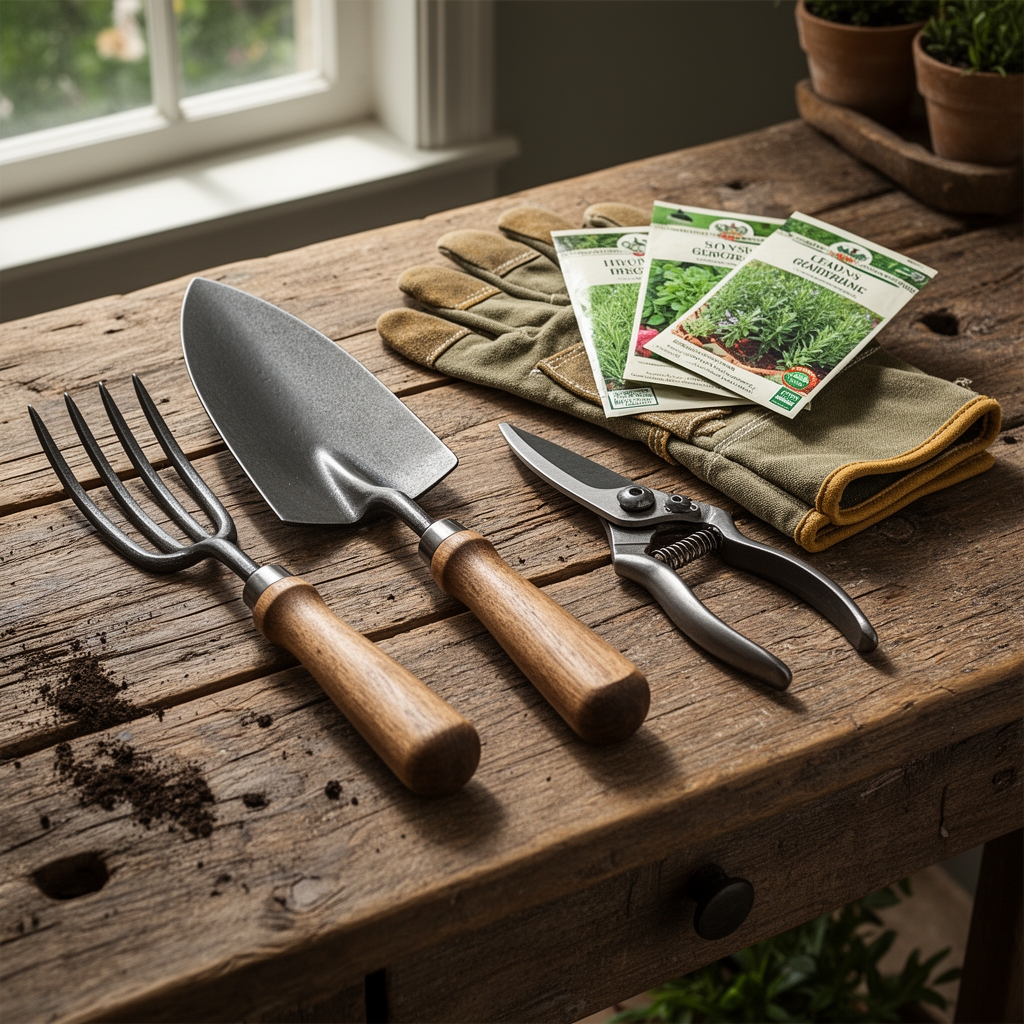
A balanced organic fertilizer at 4-4-4 or 5-5-5 provides adequate nutrition without promoting excessive vegetative growth that dilutes essential oils. Overfed plants produce lush foliage with weaker flavor. Incorporate 2 tablespoons per square foot of bone meal (phosphorus for root development) and kelp meal (micronutrients and growth hormones) into the planting zone. Mycorrhizal fungi inoculant applied at transplant establishes symbiotic networks that improve drought tolerance and phosphorus uptake, critical for low-fertility conditions.
Container growers should select terracotta pots (minimum 12 inches diameter) that allow evaporative cooling and prevent waterlogging. A 50:30:20 blend of cactus mix, perlite, and composted bark replicates the gritty, aerated structure of native garrigue soils.
Timing
Most Mediterranean herbs fall within hardiness Zones 7 through 10, though some cultivars tolerate Zone 6 with winter mulch. Rosemary and bay laurel are sensitive to hard freezes below 20°F. Thyme and oregano overwinter reliably to 0°F.
Seed sowing occurs 8 to 10 weeks before the last spring frost date for basil and Greek oregano. Perennial woody herbs like rosemary and lavender germinate slowly (14-28 days) and require bottom heat at 70-75°F. Direct-seed hardy annuals such as dill and cilantro 2 weeks before the last frost.
Transplant nursery stock or hardened seedlings after soil temperatures stabilize above 60°F. Fall planting (6-8 weeks before first frost) allows root establishment before dormancy, yielding stronger plants the following season.
Phases
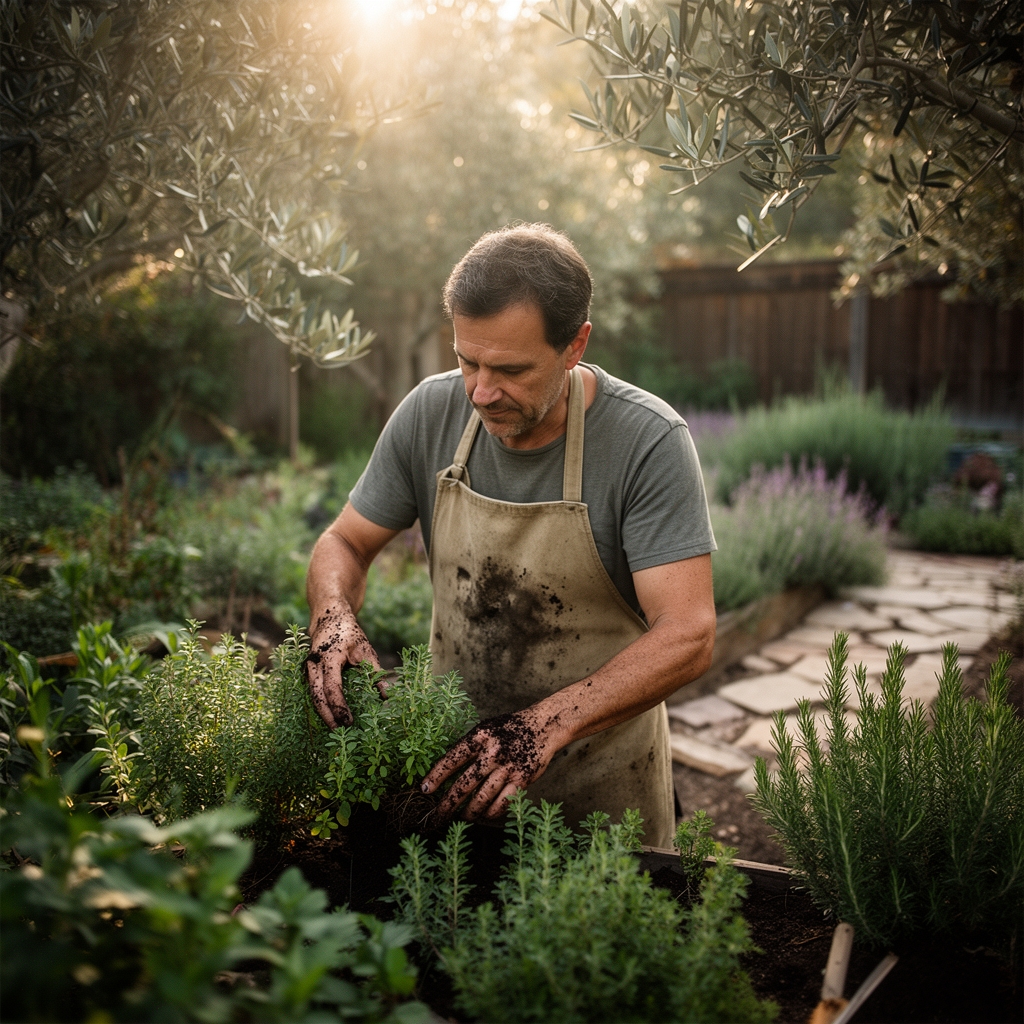
Sowing: Surface-sow thyme, oregano, and savory seeds; light stimulates germination. Cover basil seeds with 1/8 inch of fine vermiculite. Maintain consistent moisture with a mist sprayer until cotyledons emerge. Reduce watering frequency immediately after germination to prevent damping-off (Pythium and Rhizoctonia fungi).
Pro-Tip: Pre-treat rosemary seeds with a 24-hour cold stratification and scarify the seed coat with fine sandpaper to improve germination rates from 30% to 65%.
Transplanting: Harden seedlings over 7 days by reducing water and increasing UV exposure. Dig planting holes twice the root ball width. Position the crown (stem-root junction) level with the soil surface. Backfill with native soil; avoid amendments in the planting hole itself, which creates a textural boundary that traps water.
Pro-Tip: Prune transplants to remove the top 30% of foliage. This forces auxin distribution into lateral buds, producing bushier plants with more harvestable stems.
Establishing: Water deeply every 5-7 days for the first month, then extend intervals to 10-14 days. Root systems reach 18-24 inches in rosemary and sage; shallow, frequent watering produces weak, surface-feeding plants. Mulch with 1 inch of gravel or decomposed granite to suppress weeds, moderate soil temperature, and reflect light onto lower foliage.
Pro-Tip: Pinch growing tips every 3 weeks during the first season to build framework branches. Remove flowers immediately; seed production diverts energy from vegetative growth.
Troubleshooting
Symptom: Yellowing lower leaves with brown, crispy edges.
Solution: Overwatering or poor drainage. Allow the top 2 inches of soil to dry completely between irrigations. Check for compacted soil; core aerate around the root zone.
Symptom: White powdery coating on foliage.
Solution: Powdery mildew (Erysiphe species). Improve air circulation by spacing plants 18-24 inches apart. Spray with 1 tablespoon baking soda per quart of water at 7-day intervals. Avoid overhead watering.
Symptom: Stunted growth, sparse foliage, weak stems.
Solution: Nutrient deficiency or high cation exchange capacity (CEC) in clay soils. Apply foliar kelp spray (1 teaspoon per quart) every 2 weeks. Incorporate coarse sand to lower CEC and increase aeration.
Symptom: Aphid colonies on new growth.
Solution: Blast with a strong water jet every 3 days. Introduce parasitic wasps (Aphidius species) or ladybugs. Avoid nitrogen fertilizers that stimulate tender, aphid-attracting growth.
Symptom: Leggy, pale growth with reduced aroma.
Solution: Insufficient light. Mediterranean herbs require 6-8 hours of direct sun daily. Transplant to a southern exposure or supplement with grow lights (minimum 2000 foot-candles).
Maintenance
Apply 1 inch of water weekly during active growth (spring and fall). Summer-dormant species like oregano and thyme tolerate 0.5 inches per week. Use a soil moisture meter; irrigate when readings drop to 3 (on a 1-10 scale) at 6 inches depth.
Fertilize once in early spring with compost tea (1:10 dilution) or a slow-release organic blend at half the label rate. Excessive fertility reduces essential oil concentration and cold hardiness.
Prune woody herbs by one-third in early spring before bud break. Cut just above a leaf node at a 45-degree angle to shed water. Harvest stems no later than 10 AM when essential oils peak. Remove no more than 30% of foliage per cutting to avoid stressing the plant.
FAQ
How long do Mediterranean herbs take to mature?
Basil reaches harvest size in 60-75 days. Perennial herbs like rosemary and sage require 2 seasons to develop full framework branches and maximum oil production.
Can I grow Mediterranean herbs indoors?
Yes, with south-facing windows or full-spectrum grow lights (12-14 hours daily). Reduce watering by 40% compared to outdoor plants due to lower evapotranspiration.
Why does my rosemary keep dying?
Root rot from overwatering or heavy soil. Ensure containers have drainage holes, use gritty cactus mix, and water only when the top 3 inches dry out completely.
What is the best companion plant for Mediterranean herbs?
Lavender, as it shares identical water and nutrient requirements. Avoid planting near moisture-loving vegetables like tomatoes or cucumbers.
Do Mediterranean herbs need fertilizer?
Minimal. One spring application of compost or 4-4-4 organic fertilizer is sufficient. Excess nitrogen produces bland, disease-prone foliage.